






Just hours after the political events in Venezuela of the early morning of January 3, a small group of American investors began rearranging their schedules and flights. According to Charles Myers, president of the political risk firm Signum Global Advisors, some 20 investors are already planning trips to Venezuela in March. This isn’t political curiosity or impulsive bets: several of them, Myers says, had been buying Venezuelan bonds for months and preparing for a scenario they considered inevitable. While oil and gas remain the main area of interest, the investors have also been eyeing opportunities in construction and tourism.
This early move—discreet, technical, and still cautious—illustrates how recent events in Venezuela have piqued the interest of international investors. While the current narrative relies more on market signals and rumors of regulatory easing, these indicators suggest a potential reduction in barriers to entry for foreign investment.
If this shift materializes, it would mark the end of years of financial isolation and pave the way for the creation of the first investment vehicles, as well as the gradual fulfillment of capital commitments in the medium term. This does not yet represent massive inflows, but rather a functional reopening of the country to the international financial system.
That expectation is already beginning to manifest itself on three specific fronts: oil as the main anchor for foreign investment, a rise in the value of Venezuelan bonds, the reactivation of the debate on debt restructuring, and a renewed –although still speculative– interest in assets and shares linked to Venezuela.
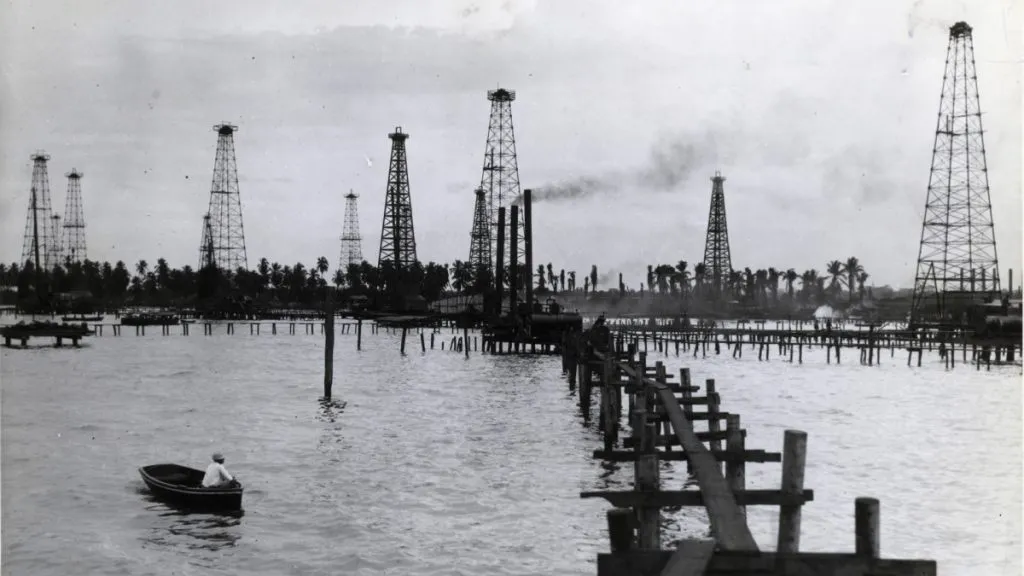
All roads lead underground
The focus of international economic actors in recent days has been on oil, which is always natural when Venezuela enters the conversation. Initiatives such as PDVSA’s negotiations to ship large volumes of crude oil to the US and a U.S. license to the Dutch multinational Vitol to market Venezuelan oil have sent positive signals abroad.
This renewed interest is not limited to rhetoric. For example, Ali Moshiri—former head of operations for Latin America at Chevron and current director of the Amos Global Energy Management fund—has already identified Venezuelan assets and is in talks with institutional investors to make a potential private investment of up to $2 billion in oil projects.
Meanwhile, the market has begun to anticipate potential indirect beneficiaries. Companies with refineries in the Gulf of Mexico, such as Valero Energy and Phillips 66—whose shares opened higher on Monday, January 5—could benefit from a possible influx of large quantities of Venezuelan oil. Mark Lashier, CEO of Phillips 66, also confirmed that his company has refineries ready to process Venezuelan heavy crude and that various players would benefit from its eventual arrival.

However, this enthusiasm is not uniform. Major American oil companies—such as Chevron, ExxonMobil, and ConocoPhillips—have been more discreet than other industry players, despite the rise in their share prices at the beginning of last week. A ConocoPhillips spokesperson stated that the company is closely monitoring the situation in Venezuela but considers it premature to speculate on any future business activity or investment.
Even so, institutional contacts continue to progress. On January 9, the US government met in Washington with 17 companies in the sector with the aim of securing an investment of approximately $100 billion in the Venezuelan oil industry: equivalent to more than 50% of the funds needed to increase daily production.
This injection of resources is fundamental for sustained growth in the industry. According to Rystad Energy, an energy consultancy, more than $183 billion would need to be invested to achieve a production of 3 million barrels per day. According to economist Francisco Monaldi, an expert in energy markets, small and short-term projects can currently be implemented in Venezuela. “A significant recovery is possible,” he explained on his blog, “but only if it is based on lasting political change, credible institutions, and a long-term commitment to restoring investor confidence.”
The caution of the oil companies was clear during the meeting: before making concrete investment commitments, they expect the rules of the game to change. In other words, they need to operate under a new framework of reforms that offer legal certainty and a credible contractual framework.
But even there are nuances. At the meeting, Jeff Hildebrand, CEO of Hilcorp—a company currently inactive in Venezuela—stood out, stating that “Hilcorp is committed and ready to go to rebuild the infrastructure in Venezuela.” It was one of the few explicit commitments made by a CEO during the meeting with Donald Trump.
Even so, the process is far from over and will require protracted negotiations between the U.S. government, Venezuelan authorities, and companies in the sector, with constant attention to every sign and every decision. There are still no certainties, but there is a shift in perspective.
The second coming of Venezuelan bonds
The initial market reaction has been most clearly reflected in Venezuelan debt. In the days following recent events, PDVSA bonds maturing in 2026 and 2035 saw significant increases in the secondary market. On January 5, the 2035 bonds rose from around 26 cents on the dollar to nearly 33 cents, reaching multi-year highs. These instruments function, in practice, as a forward bet on the company’s eventual operating return and its future ability to meet its financial obligations.
That move is not accidental.
For specialized investors, Venezuelan debt represents one of the most extreme but potentially most profitable cases within the complex markets of the Global South. In fact, Lee Robinson, founder and chief investment officer of Altana Wealth—an investment firm specializing in distressed debt—states that PDVSA’s debt is the lowest-priced for a country in crisis.
In that regard, following recent events, Altana Wealth alone has seen a 30% gain in its purchases of Venezuelan government debt. It is possible that in the near future these instruments will attract the attention of investors with lower risk profiles. “I suspect a good number of investors will enter in the coming weeks, as they come to the conclusion that there is limited downside risk in Venezuela in the short term and much more upside potential,” Lee said in an interview with CNBC.
Furthermore, starting in 2023, JP Morgan Chase & Co. reintroduced Venezuelan debt into its EMBI indices —one of the first variables investors consider—following the lifting of sanctions on the secondary market. Trading volumes remain low, largely driven by hedge funds and distressed debt specialists; however, investing in these instruments has proven to be one of the most profitable strategies, fueled by a growing appetite for risk.
More than one restructuring on the horizon
But in addition to PDVSA bonds, markets focused on Venezuelan sovereign debt, that is, all the obligations issued by the state. In fact, in recent days, international sovereign bonds also experienced a price increase, which many attribute to a reassessment of the possibility of a complete restructuring of the external debt.
According to estimates by economist Asdrúbal Oliveros, this debt—which has been in default since November 2017—could be around USD 168 billion. “That includes all of Venezuela’s external liabilities,” he explains, “including expropriations, oil and non-oil debt, multilateral and bilateral loans, international arbitration awards, debts to contractors and other suppliers, debts to partners in joint ventures, and other loans.”
One element that has gained relevance in this regard is that the state authorities in charge appear to have hired Dentons and Rothschild & Co —firms with experience in restructurings— to address the complexity of the debt, advice that is part of the technical preparations to talk with creditors and financial markets.
Local reports indicate that these players have been hired to analyze the outstanding debt and how to approach a preliminary restructuring plan, but this does not mean that the authorities have yet granted each of them a mandate to represent them in the debt restructuring process. These processes can be complex; they are not something that can be improvised. The involvement of these advisors is necessary to provide clarity on the matter and generate greater confidence in the markets. One of the remaining steps to demonstrate that the debt restructuring process is becoming more credible is for the U.S. government to lift the sanction that prevents Venezuela from accessing the primary market.
According to US Treasury Secretary Scott Bessent, some sanctions on Venezuela could be lifted this week to facilitate oil sales, and he will hold meetings with officials from the International Monetary Fund and the World Bank to explore a process of re-engaging with the country. Meanwhile, a group of global investors —including firms such as Morgan Stanley Investment Management and Greylock Capital Management—has indicated it is ready to begin talks on more than $60 billion in defaulted Venezuelan bonds, a first step toward what could become one of the world’s largest and most complex sovereign debt restructurings.
Stocks are also reacting

Alongside state financial instruments, the Caracas Stock Exchange (BVC) has been experiencing a boom in recent days: In the first week alone since January 2, the BVC Index experienced a historic increase of 148% (the equivalent of +135%, discounting the depreciation of the dollar in the black market), with inter-day growth rates of up to 50% in bolivars or 62% in dollars.
“I’ve never experienced anything like this week,” said a source who works at the BVC, “It felt like a war. The trading volume wasn’t that high, but the pressure to buy what little was available was. Many people wanted to buy whatever was available, regardless of the price; and investor interest in opening brokerage accounts increased exponentially.”
For the past two years, the Caracas Stock Exchange has been an investment alternative for Venezuelans, especially to protect their savings against the depreciation of the bolivar; “But the change in future expectations led investors to shift their thinking to buying shares in search of real future returns,” the source consulted by Ecosistema said.
This surge arises within the context of the possibility of creating an ETF linked to Venezuela, that is, an investment fund that is traded on the US stock exchange —just like a stock—, and replicates the behavior of a specific index or sector, allowing investors to buy a “basket” of assets.
This ETF —which is still under review by the US securities regulator— would not be designed to directly replicate the BVC index or to buy shares listed on it, but rather to group national and international companies that derive a relevant part of their income or assets from the country.
But although the international market’s interest in this instrument doesn’t say much about the local stock exchange, the Caracas Stock Exchange offers an opportunity to emphasize the financial transparency it demands of all parties involved and the democratization of access to capital for all types of investors.
This same logic also helps explain why some international stocks react in parallel to events in Venezuela. For example, in the first days of the year, e-commerce giant Mercado Libre’s stock price saw positive movements, driven by analyses that link a potential change in the situation with increased consumption and future opportunities for e-commerce and financial services in Venezuela.
In strictly business terms, Venezuela still represents a small fraction of the company’s total revenue. However, according to sources close to the company in Venezuela, Mercado Libre plans to introduce one of its services not currently offered in the country by 2026.
Although some private foreign investment has occurred in the recent past, it has been very timid and limited considering the financing needs, which in some sectors can exceed $5 million. However, the country now has public interest from institutional investors willing to share information about their financial holdings in Venezuela, which is gradually opening up a new level of expectations.
The new boom in the Venezuelan financial ecosystem follows a pattern consistent with what typically occurs in economies emerging—or attempting to emerge—from prolonged periods of financial blockade: First, the secondary market is reactivated; then, vehicles and sectors appear to capture exposure without making a full commitment. Later, when concrete results emerge, rather than just expectations, the market begins to react based on the actual performance of those initial investments, adjusting—or moderating—the initial growth narratives. Only at the very end does direct investment begin, if conditions allow.
This process is only in its early stages. But Venezuela already offers a starting point.