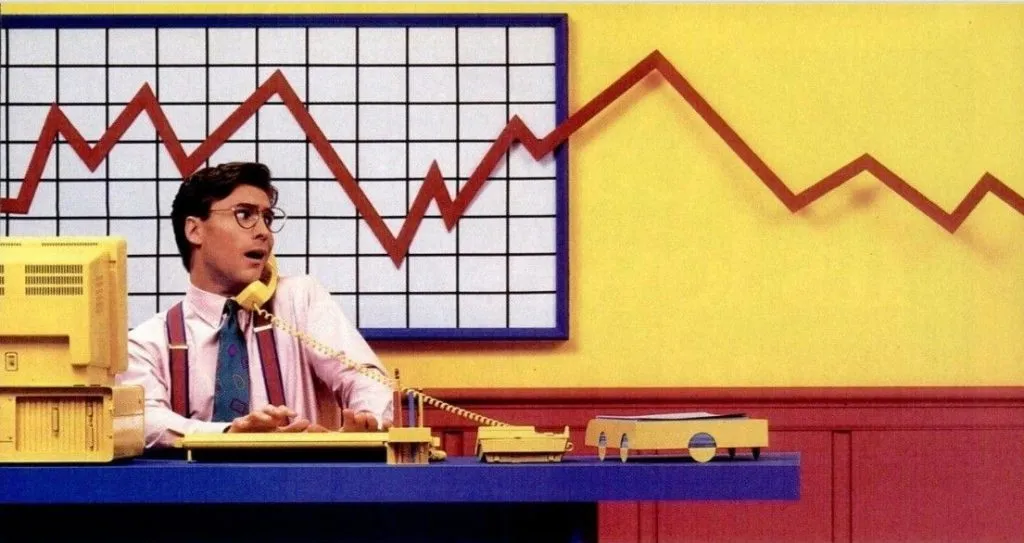








In a matter of days, the price of the dollar in Venezuela —the unofficial exchange rate— reached record highs, only to then plummet. This is not an isolated phenomenon: It is the market’s response to expectations surrounding the possibility of new foreign currency injections into the Venezuelan economy.
From oil to the end consumer, passing through a new financial circuit in between, this new foreign exchange season reconfigures the potential of more than one sector in Venezuela, marking the first step towards concrete opportunities for greater and sustained economic growth: within the framework of the new geopolitical context, the US government deposited 500 million dollars, from the sale of Venezuelan crude, into a trust in Qatar, with 60% of that amount —equivalent to 300 million dollars— being allocated to the Central Bank of Venezuela (BCV) for currency intervention in the foreign exchange market.
The peculiarity of this movement lies in its execution: It has been arranged that the settlement of foreign currency will be carried out through auctions directed to five of the many private banks that do not have OFAC restrictions —Banco Mercantil, Banco Nacional de Crédito, Bancamiga, BBVA Provincial and Banesco—, which must then channel them to priority sectors such as health and food, provided they have a SWIFT code, as mentioned on X by the director of the consulting and research firm Ecoanalítica, Alejandro Grisanti.
“The Central Bank of Venezuela (BCV) will receive the bolivars generated by these auctions and can only use them to pay salaries and employee benefits, ” Grisanti added. Thus, this new system could reduce exchange rate pressure while simultaneously increasing discipline in the use of the public budget, under close US monitoring of how and where Venezuelan state resources are allocated, within the framework of an “cooperation” effort.
Deciphering the new financial circuit
At least temporarily, the new injection of dollars should act as an anchor, allowing the exchange rate to meet the immediate demand for foreign currency. “One would assume it would ease pressure on the unofficial markets,” says economist and university professor Leonardo Vera. “It would help close the exchange rate gap, which is generating significant distortions.” According to economist Asdrúbal Oliveros, this scenario could lead to a return to price stability in dollars.
According to Vera, although this measure may be temporary, it could yield short-term benefits. However, to ensure the viability of this scheme and counter depreciation expectations, this influx of dollars must be repeated at a defined interval.
All this does not imply a radical change to the exchange system per se —which for the moment does not appear to be moving away from a fixed adjustable one, but it does imply a change to its circuit, which will now have greater participation from the private sector.
In the case of the banking sector, a senior executive from one of the banks included in the scheme points out that, although there is still no officially published methodology, “everything indicates an auction mechanism, similar to known intervention schemes, but with different logistics, because the funds come from abroad via correspondent banks.” In her opinion, viability will depend on continuity and transparency: “If it is an isolated event, the impact will quickly dissipate; for it to work as a currency anchor, it has to be recurring and with clear rules.”
Although prioritizing food and health is logical, the senior executive explains that “the banking sector is pushing for atomization criteria, to avoid concentrations and progressively open up space for SMEs.”
However, regarding the scope of the measure, the executive is cautious: “A one-off injection doesn’t normalize the market; what truly stabilizes it is the expectation that there will be a flow of funds over time.” As for the operational channel, the use of foreign accounts and SWIFT under licenses “is currently the only viable and traceable option,” she states, although she acknowledges that it is costly and demanding. “In a normalization scenario, the ideal would be to return to a Central Bank of Venezuela (BCV) operating directly, but that doesn’t depend on the banks themselves, but rather on international correspondent banks having regulatory certainty,” and on the lifting of sanctions against the bank, she explains.

Carlota Urbano –a financial operator at Banco Venezolano de Crédito, which has not yet been included in the initial scheme– believes the signal is positive, especially because of the prioritization of health and food: “These are the items with the greatest immediate impact on supply and on containing the pass-through to prices.”
However, she cautions that a one-off disbursement will not resolve the pent-up demand. “Sustained stabilization requires persistence and predictability; in my opinion, regular rounds exceeding US$600 million per month, surpassing the 2025 flows,” she explains. In the short term, Urbano believes the offshore scheme is likely to continue: “A rapid return to a Central Bank of Venezuela (BCV) without sanctions is a political-regulatory scenario, unlikely without an explicit license or a formal lifting of the sanctions in the coming months.”
New funds, new laws
But the new influx of dollars isn’t limited to a reconfiguration of the financial system. Last Thursday, the government announced the creation of two sovereign wealth funds: one for social protection—aimed at sustaining workers’ real income and guaranteeing direct subsidies in a highly volatile environment—and another for infrastructure—which will focus on critical areas such as the electrical grid, drinking water supply, and road network. These funds will operate on a technological platform designed to allow for transparent tracking of resources, according to the government.
For Vera —who made a similar proposal in a published study in 2023— these announcements have a positive impact on the economy, especially if the design of the funds includes proper governance and institutional oversight. By safeguarding the purchasing power of many Venezuelans and addressing some of the obstacles that most undermined production possibilities over the last decade, the announced funds will, in principle, remedy structural factors related to supply and demand, respectively.
Other announcements on Thursday included the proposed Organic Law for the Acceleration of Procedures, which would seek to remove obstacles in administrative procedures related to investments, and a partial reform of the Organic Law of Hydrocarbons, especially with a view to formally incorporating the Productive Participation Contract (CPP) that allows the exploration, production and export of oil to entities with minority participation of the State or private entities.
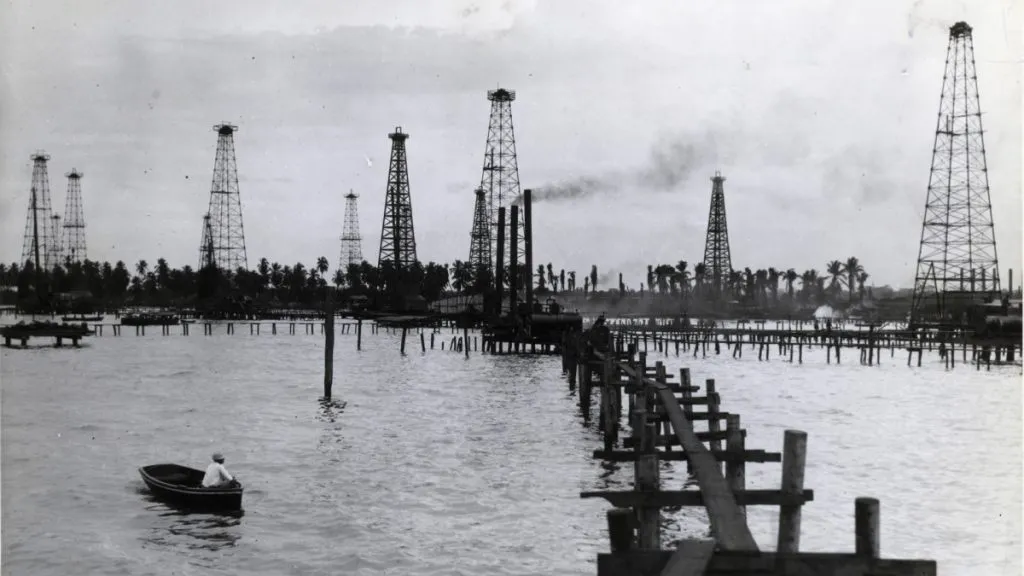
If these proposals are realized —and sanctions eventually be lifted— energy investment in the country would be significantly facilitated. We could then speak not of the Chevron model, but of more Chevrons and on a larger scale than we have seen in the recent past. For these reasons, Oliveros even estimates 30% growth for the oil sector in 2026, double the rate of the last two years.
The agro-industrial spring
Another winner in this new dollar season is the agribusiness sector. “It’s not unreasonable to think that this year [that sector] will have a significant performance, with growth around 15%,” says Oliveros, who also notes that this is the sector that has grown the most in the 2021-2025 period, with rates exceeding 40%.
Despite having a considerable component of local production, the Datanalisis Scenarios studies that the eponymous firm has carried out with entrepreneurs from each sector identify the lack of foreign currency as one of the main blockers of agro-industrial growth in more than 92% of cases, while for the rest of the sectors it happens in less than 80% of cases: A sample of how particularly sensitive the agro-industrial complex is.
“Food production depends on the import of raw materials,” explains Ibelisse Suárez de Álvarez, General Manager of the Venezuelan Exchange of Agricultural Products and Inputs (Bolpriaven). “It is critical to have sufficient foreign currency and in the appropriate timeframes” to be able to guarantee payment to foreign suppliers.
But in addition to imports —that is, of inputs that guarantee operational continuity in the short term— it is logical to think that part of the dollars that enter the system will be used to improve the use of installed capacity, more structural factors and oriented towards the medium or long term: According to industrial guild Conindustria, the food sector only operates at 50% of its installed capacity, while in countries like Brazil or Colombia the utilization levels are around 80%.
An improvement in this area would be significant, as it would overcome a bottleneck that has plagued the sector for the last decade: surviving outside of the current circumstances. Thus, in this context, we could expect more active production plants, more equipment running, and higher production levels that would allow us to supply not only the economy at its current size, but even in a scenario where it grows.