







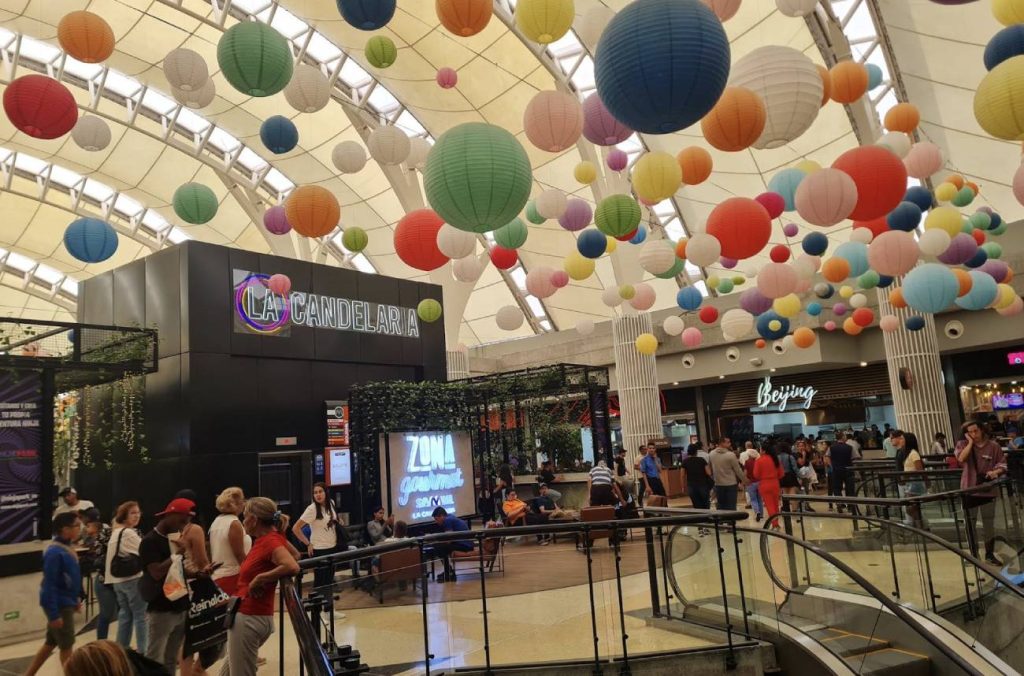
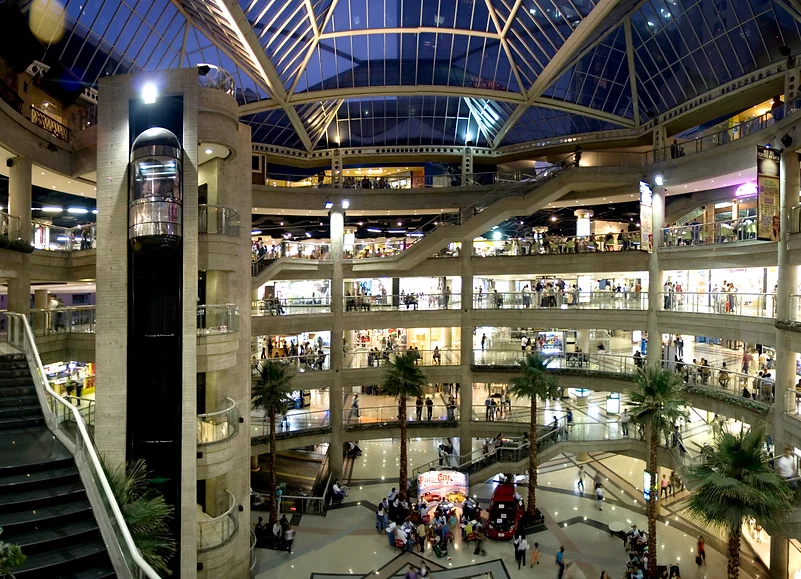
In Caracas, a visit to the Sambil La Candelaria mall is enough to reveal crowds strolling its corridors, stores with BNPL Cashea logos, a MoDo bar, and the upcoming openings of international franchises like Toys R Us, a Miniso flagship store, Kenneth Cole, Forever 21, and Bath & Works. In the east of the city, Sambil Chacao is reclaiming its role as a consumer giant, with shoppers flocking to the newly opened Zara and H&M. This vibrant scene coexists with a more complex reality: in the wake of the pandemic and amidst an economy that shrank by nearly 75% between 2013 and 2020 according to the IMF —and with an average income projected to hover around $237 by 2025, according to the Venezuelan Finance Observatory—Venezuelan shopping malls are reinventing themselves to survive and win back a battered consumer base, prioritizing infrastructure, entertainment, and extensive renovations.
This recent attempt at reinvention—which has led eight out of ten Venezuelans to visit shopping malls at least once every two weeks, according to local firm Datanálisis—contrasts sharply with the starting point: the crisis generated a double pressure that hit shopping malls hard— fewer businesses to fill spaces and less purchasing power among visitors—just before the pandemic finished dismantling the model. Lockdowns emptied corridors, slowed traffic, and accelerated the shift to e-commerce, a channel that not only replaced physical sales but also consolidated its position: in 2024, e-commerce grew by 97%, and by the end of 2025, it is projected to exceed 100%, according to the Venezuelan Chamber of Electronic Commerce. In this context, Venezuelan malls had to rethink everything from their structure to the customer experience in order to regain relevance.
The rebirth of the giants
The renewed momentum of Venezuelan malls stems from the renovation of spaces and modernization of their commercial offerings by shopping center developers starting in 2023 and 2024, says Claudia Itriago, president of the Venezuelan Chamber of Shopping Centers (Cavececo). This process involved remodeling their spaces, adding entertainment options such as paddle tennis courts and cinemas, and attracting new international brands. This reinvention can be traced back to the opening of the Sambil La Candelaria mall in late 2022 and its inauguration in mid-2023, followed by significant attention on social media and in the press.
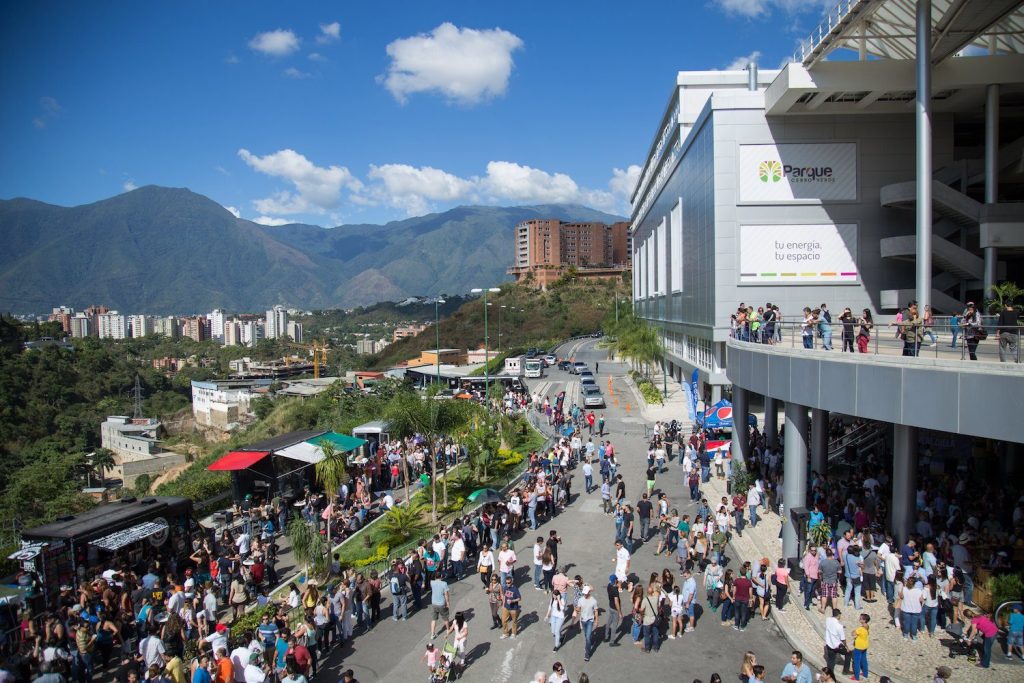
During this period, relatively new shopping centers like Parque Cerro Verde have expanded their offerings and established themselves as part of the ecosystem of recreational spaces and experiences in Caracas. Meanwhile, more established centers have undergone significant changes in their concept, such as Boleita Center, which transformed into Caracas Outlet.
Another factor that has played a role in this new era for malls is the arrival or return of some foreign brands such as Forever 21, Victoria’s Secret, and Miniso. The most emblematic case is that of the Inditex group: with brands like Zara, Bershka, Pull & Bear, and more recently Stradivarius, which have generally opened large stores and used technology—for example, self-checkout kiosks and RFID tags—as a differentiating factor.
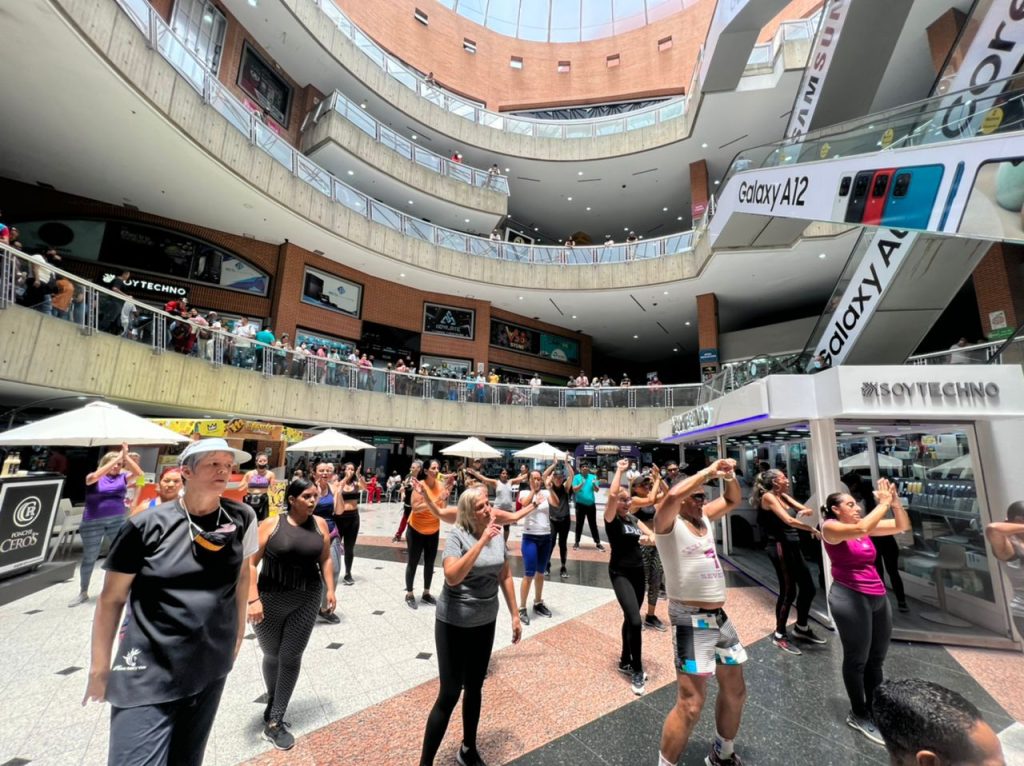
Today, developers no longer see shopping malls simply as places to buy goods and services, but as an experience. This is evidenced by the fact that, according to Itriago, entertainment ranks second among the most popular activities in shopping malls, with traditional offerings like cinemas and theaters alongside more recent additions such as go-karts, wind tunnels, and children’s theme parks like Ninja Park. Meanwhile, food shopping remains the most popular activity, and sports activities like padel and gyms come in third.
And the transformation of shopping centers hasn’t been limited to their physical spaces, but has also extended to how malls promote themselves, using various strategies to establish a presence on social media . The most popular format is a vertical video, narrated by an influencer or other prominent figure, showcasing new stores , renovations , or less frequently visited areas of the building.
This new direction has allowed the sector to grow from nearly $7 billion in revenue in 2023 to $9 billion in 2024, according to Datanálisis. In some cases, this growth has continued into 2025, as is the case with El Recreo Shopping Center, which has increased its sales by 25% compared to the previous year and has a vacancy rate of only 10%. In fact, according to Cavececo—which represents 131 shopping centers—the average vacancy rate is between 12% and 15%: although there are extreme individual cases, in a deeply unequal country, ranging from a very successful 2% to a staggering 40%.
Size does matter
However, there is another player within the sector that often goes unnoticed on social media: the small shopping center, smaller in size and generally located in middle-class residential areas. These tend to be further away from the main, busy avenues, and their primary clientele consists of people who live in the surrounding neighborhoods. To better understand their status, the Ecosistema team visited some in Caracas.
In general, there are common patterns among these businesses: more empty storefronts than in large malls and activity almost exclusively in “essential services” such as pharmacies or bakeries. At the El Ávila Shopping Center in Terrazas del Ávila, we found that customers, regardless of age, frequent the same establishments.
“I only go to the bakery, the supermarket, Chip-a-Cookie, and the hairdresser,” said José Manuel, a 22-year-old shopper. “Neighbors usually go to get their basic needs met.” Virginia, 44, agrees, saying, “I generally go to the supermarket, and if I need to take care of something quickly, I go to a stationery store or a hardware store.”
On the other side of town, at the La Villa Shopping Center in Montalbán , the story was similar. Many storefronts were empty, others closed with merchandise still inside, and little activity was happening around the businesses that are essential to the community. “People usually only come for the supermarket, the pharmacy, the bakery, and the hair salon; otherwise, there’s not much going on,” said Antonio, 26. In fact, in one empty storefront, someone—probably as a joke—decided to conduct a poll on a banner above the windows, asking which business should open there. Surprisingly, in a sort of informal vote using pencils and pens, the community took the opportunity to express their opinion.

Interestingly, some of the most popular options were a café, a gaming area, or a bar: businesses that can be associated with the concept of a third place —those spaces distinct from home and work, where social and community interaction is encouraged. Leveraging this need for shared spaces could be a revitalizing strategy for these urban malls.
Third place: an opportunity for the little ones
This phenomenon is already occurring strongly in the United States in the wake of the pandemic. According to James Corl, Executive Vice President of Cohen & Steers, a major American investment management firm, neighborhood or community shopping centers are the only type of property in the United States experiencing an acceleration in rental rate increases, which has attracted large institutional investors. This strong performance may be due to their greater resilience to e-commerce because they are anchored in essential services that require in-person visits—just as the rise of remote work intensified the demand for local goods and services.
A successful example in Venezuela of leveraging convenience to develop a shopping center is the San Luis Shopping Center, located southeast of Caracas. Within its small footprint, it offers a supermarket, pharmacy, grocery store, stationery shop, hair salon, gym, and a 24-hour veterinary clinic , among other businesses; along with established food establishments like Molokai, Pan de Tata, and Granier, as well as an artisanal coffee shop. All of these benefit from other traffic generators in the vicinity, such as the offices in the Mayupan tower and the Acuarela bar. For instance, Angela, who manages one of the shopping center’s stores, commented that “not only do local residents come to shop, but also people coming from work or going to the bar next door.”
While the shopping center is located in an area with above-average purchasing power, there are strategic decisions that could be replicated in other locations. For example, measures such as extending hours until 10 pm and not charging parking fees encourage more visitors.
However, beyond size, it’s crucial for any shopping center to understand the extent of its catchment area and the consumers who frequent it. If this area is very large, as is the case with Sambil, the customer profile will be more heterogeneous, requiring a more diverse offering within the center. It’s also important to integrate an omnichannel sales model, where digital, physical, and hybrid sales channels, such as showrooms, can coexist. This way, they can offer a tailored experience to their visitors and gradually establish themselves as that essential third place they so desperately need.