






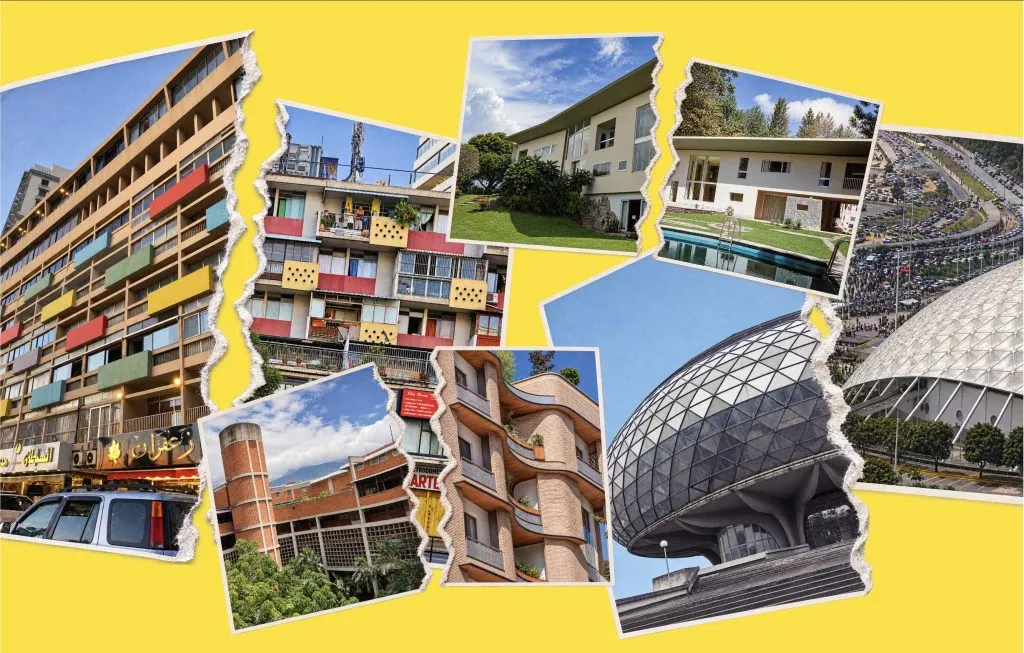
Last October, months after Israeli fighter jets crossed the sky over Tehran, the Iranian capital, the country’s only auction house sold off a million and a half dollars in contemporary art from the ballroom of a 1970s hotel. It was not a burst of extravagance: when money has no sovereign exit and the stock market is a flat electrocardiogram, a signed canvas trades with the same liquidity as a gold bar.
Some two thousand kilometers away, in Beirut, the capital of Lebanon, close to 70 billion dollars — the famous lollars — remain fossilized inside a defunct banking system, while the little pedestrian streets of Saifi Village serve matcha lattes at exorbitant prices. And in Belgrade, where capital likewise finds no escape route toward the West, savings harden into concrete: the Serbian capital has just opened a St. Regis, is planning a Ritz-Carlton and has absorbed more than a hundred thousand Russians since 2022, all without ever quite aligning itself with anyone.
After reading, watching and talking at length with locals from these cities, I could not shake the feeling — as a caraqueño — that I was looking at myself in a mirror: the mirror of the liminal cities.
Three cities, one same instinct
There is a kind of city that the global order never quite managed to digest. Cities that were left on the threshold, neither inside nor outside the system, and that instead of dying while they waited for permission developed an economy of their own out of the gap. We could call it the liminal economy: the economy of the threshold, native to places that live between geopolitical blocs, between sanctions, legal vacuums and artificial booms.
Belgrade inherited the muscle of Yugoslav non-alignment and the sanctions of the nineties, and today it flexes that muscle shamelessly: it is a candidate for the European Union but does not sanction Russia, it buys gas from Moscow while it sells copper to China, and it builds towers financed by Emiratis next door to the offices of Microsoft and Oracle. Beirut was for decades the middleman of the Middle East, the “Switzerland of the Middle East,” until the model collapsed in 2019 and swallowed the savings of an entire country. And Tehran is the limit case: under genuinely heavy sanctions, with no SWIFT and no global banking, Iran built more than six thousand startups and its own “Silicon Valley of the Islamic world” on the outskirts of the capital.
Caracas practices the same art, however much it costs us to admit it without a certain embarrassment. But the interesting part is not in the macroeconomic aggregates. It is in who holds all of this up.
The class in the middle
If you look carefully at the four cities, the protagonist is always the same: a professional middle class that refuses to disappear.
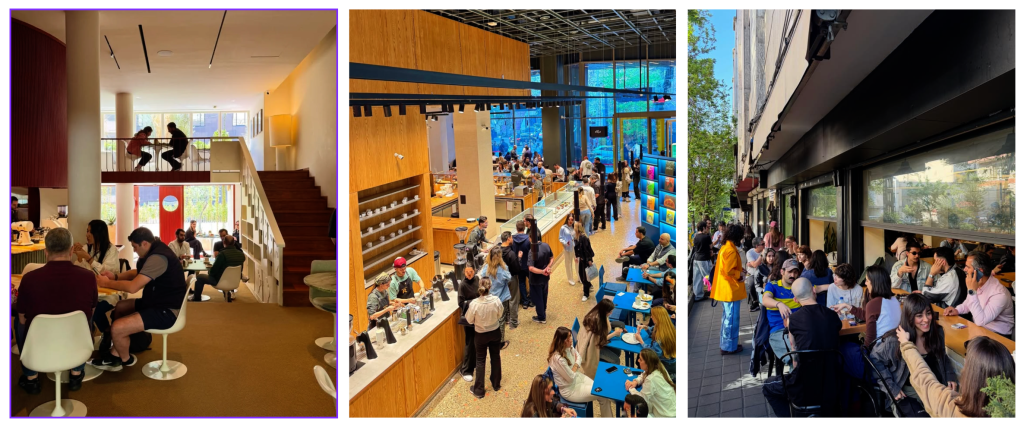
In Tehran it is the engineers. Iran graduates thousands of them every year from universities that rank among the best in the region, and since they can import almost nothing, it puts them to work inventing local substitutes for everything. Those who do not end up in the startups of Pardis end up behind an espresso machine: in the Iranian capital, being a barista has become an aspirational career, with its courses, its competitions and its own logic of promotion. Specialty coffee, discussed in sommelier vocabulary by kids with piercings, is the nightlife that forbidden alcohol cannot offer, and also an escape plan: learn latte art in Tehran, get a job in Istanbul afterward. The Iranian middle class cannot take its money out, so it converts it into paintings, into square meters and into a form of capital no customs office detects: a trade.
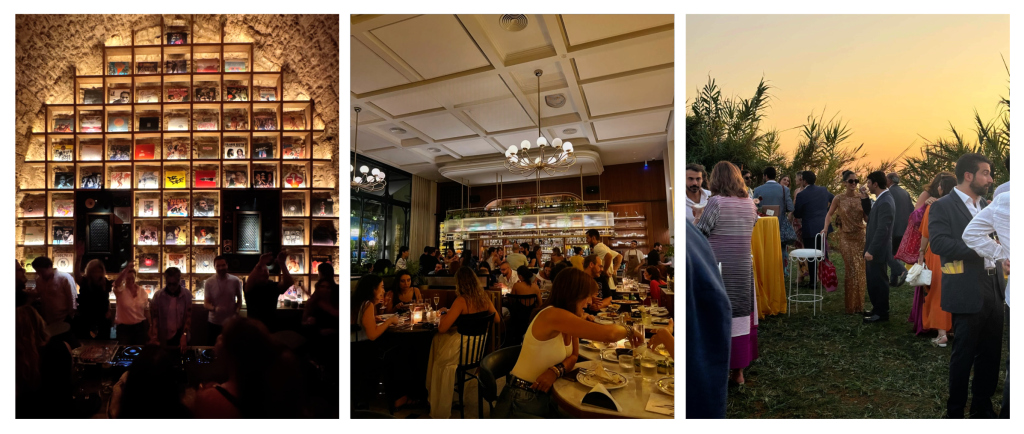
In Beirut it is the twice-betrayed professionals. The banking crash of 2019 wiped out the savings of doctors, architects and engineers who had done everything “right”; the port explosion of 2020 wiped out whatever confidence was left. They left by the tens of thousands. And yet, since last year they have been coming back: an endocrinologist who spent five years in Paris training in digital health, for example, or a heritage architect who returned to rebuild.
In Belgrade it is the programmers: in a city where absolutely everyone speaks English, where Microsoft has been present for twenty years and employs seven hundred people, where funds and multinationals arrive not for the local market but for the talent. An insurance startup called ominimo, for instance, has just become the first unicorn in the country, at a valuation of 1.4 billion euros.
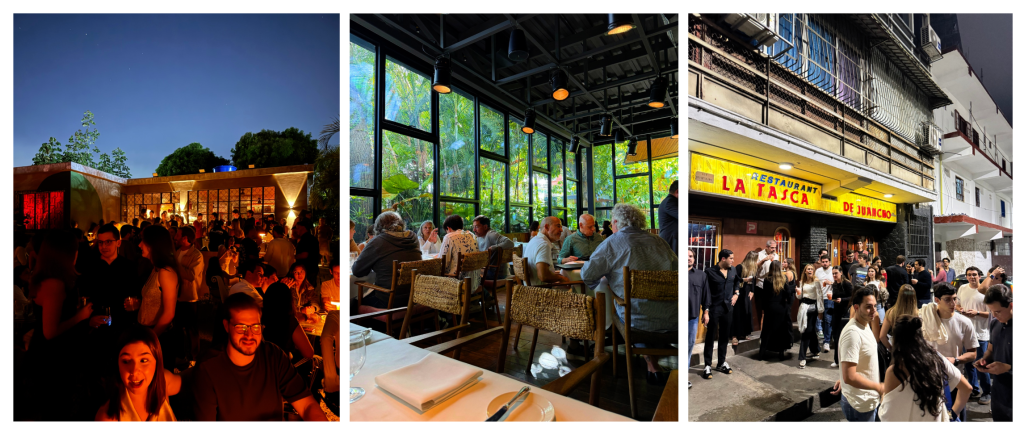
And in Caracas it is us: the generation that studied abroad, or studied here expecting to leave, and that is discovering — with a mix of astonishment and vertigo — that the country we had written off as closed became the market where their skills pay off the most. They are the ones who kept the corporations and multinationals in Caracas standing, or who set up the fintech, the dark kitchen, the marketing agency, the boutique law firm. The Venezuelan professional middle class was decimated by emigration, yes. But the fraction that stayed, plus the fraction that is starting to come back, is operating with an advantage that appears in no manual: it knows how to translate between worlds. And that, in a liminal economy, is the scarcest raw material there is.
Now, the counterintuitive fact, which to my mind is the key to the whole matter: those middle classes were formed, and survived, under authoritarian regimes or slowly decomposing states. The Islamic Republic patrols the cafes of Tehran with the morality police, but it never stopped graduating first-rate engineers; today it needs them so badly that it subsidizes technology parks for them. Serbia went through Slobodan Milošević’s authoritarianism, the sanctions and the NATO bombings, and came out the other side with an entire bilingual generation employable by any multinational. Lebanon has not had a functioning state in fifty years and even so its universities went on producing the doctors and bankers who today run half the Arab Gulf. And Venezuela endured two decades of a project that treated the middle class as an ideological enemy and still failed to dissolve it: it exported it, which is not the same thing. A middle class in the diaspora is still capital belonging to the country that formed it, it sends remittances, it sends ideas and, when the cycle turns, it sends itself back.
That, I think, is the difference between a liminal city and a city that has simply fallen. Liminality needs someone to operate it: without a critical mass of professionals, the gap produces no startups, no art auctions, no specialty coffee. It produces only silence. There is a reason Caracas is still relevant on a regional level and Managua is not. Nicaragua has comparable authoritarianism, comparable alienation and even a comparable de facto dollarization; what it never had is a professional middle class with the density, the training and the global connections of ours. Autocracies can confiscate companies, shut down newspapers and rig elections from one day to the next. What they cannot do is manufacture a middle class by decree. In that mismatch, exactly there, is where the liminal economy lives.
Puro beisbol
But Caracas has something that sets it apart from its mirrors: our middle class was not formed translating between East and West, like the Lebanese one, nor between socialist and capitalist blocs, like the Serbian one. It was formed in an intimacy with the United States that has no equivalent in South America.
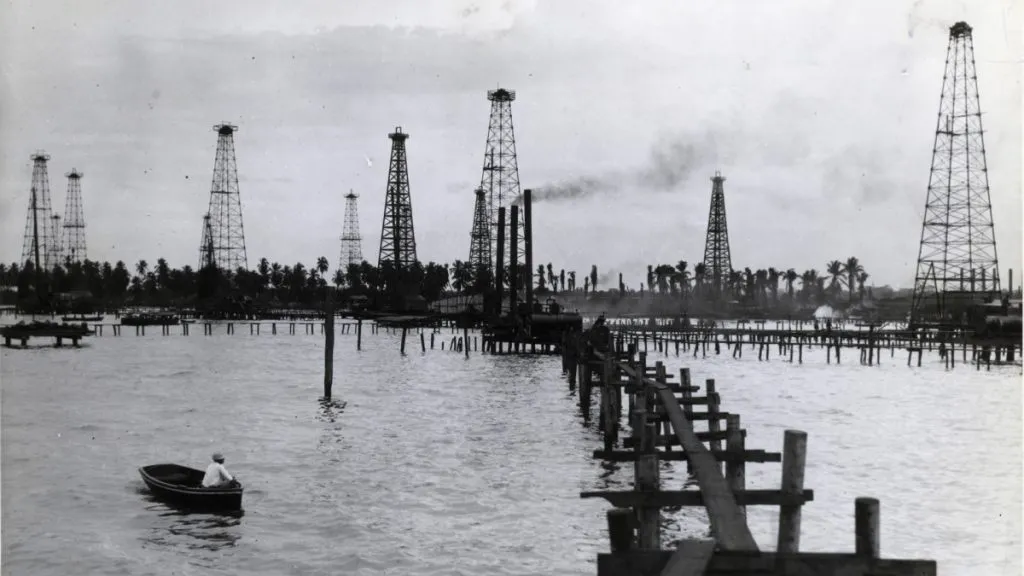
It began in the oil camps of the thirties, when the American concession companies brought — along with the drills — a complete civilizational package: the commissary, baseball, the refrigerator, boxed cereal, beauty pageants and Hollywood movies. Then gringo modernity moved out of the camps and into the city. The Rockefeller group (yes, those Rockefellers) founded the CADA chain in the late forties, and with it taught Venezuelans to do the shopping by pushing a cart down refrigerated aisles, a decade and a half before the format became the norm in the rest of the continent. Sears opened in Caracas in 1950 and its catalog became the illustrated dictionary of the middle class: the washing machine, the record player, the bicycle from Baby Jesus. General Motors and Ford did not limit themselves to selling cars: they assembled them here, and owning a car — big, American, eight cylinders — became the fastest-issued membership certificate of the middle class in the region. Caracas turned into a city of highways, Venezuela turned into a car-dependent society.
By the time the Centro Ciudad Comercial Tamanaco opened in the mid-seventies, the circle was complete: the American mall converted into a public square, with air conditioning and parking. Saudi Venezuela did more than import the American way of life; it began practicing it with more devotion than its inventors, giving it a Caribbean touch. The “tá barato, dame dos” — it’s cheap, gimme two — of the shopping trips to Miami was not merely a joke but a window into the soul of a country that understood itself as the hemisphere’s favorite partner; the shop window of capitalism and liberal democracy in the Americans’ backyard within the framework of the Cold War.
That cultural formatting was never erased. It survived chavismo, which fought it rhetorically while its nomenklatura shopped in the United States and traveled to Disney. It survived the “sanctions,” which turned American snacks into premium contraband. But above all, it survived the idea that Venezuela had become a regional pariah, which is proving useful to the equation this article is setting out.
The hardware changed its provenance
But something else shifted during that political and economic upheaval: the aspiration in Venezuela is still American, but the hardware that sustains it no longer is.
The cars that caraqueños are now buying no longer come off the GM lines in Valencia (the plant closed in 2017) but out of Chinese containers: JAC, Chery, Changan, models conceived for the Chinese and Indian markets, designed from the outset for countries with our purchasing power and our potholes. The phones that dominate the display windows are called TECNO and Infinix, brands of the Cantonese company Transsion that you cannot find in the United States or in Europe: not because they cannot compete, but because they were never meant for that market. They are phones designed for Africa, South Asia and countries like ours: battery life for cities with blackouts, dual SIM, a price calibrated to informal-sector wages. Venezuela no longer buys top-of-the-line technology from the U.S.; it buys the technology that the Global South designs for itself.
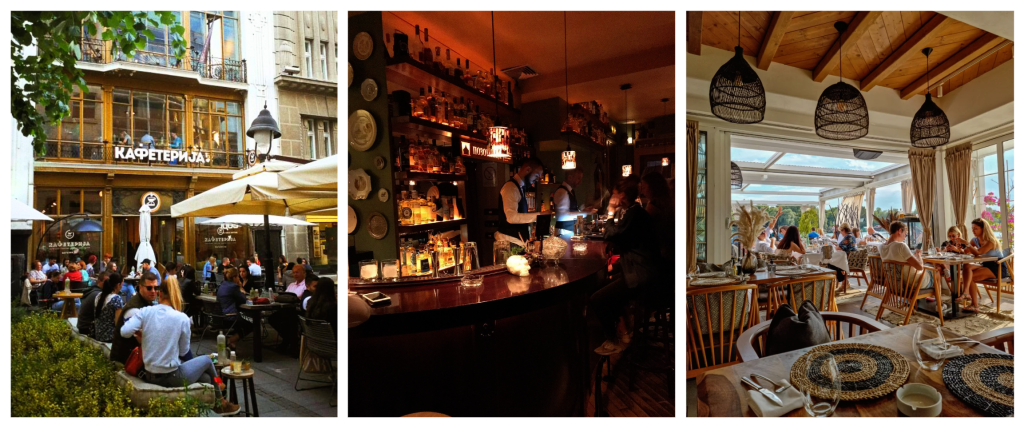
The result is a scene that sums up the moment: a kid has breakfast in a place with a “Miami” aesthetic — white tile, neon lettering, specialty coffee — and orders a matcha latte with an Infinix phone in hand while a JAC SUV waits parked outside. The dreams come from Miami, the products from Shenzhen and Mumbai, and the tutelage — or the shadow, depending on which lens you use — now comes directly from Washington. Multipolar de facto, unipolar de jure.
The liminal cities know that schizophrenia well and they teach that it is not a contradiction to be resolved but an asset to be managed. Belgrade bills in euros, heats itself with Russian gas and builds with Gulf capital. Tehran collects Persian art with money that cannot leave, drinks coffee made from subsidized beans and tries, without much success, to regulate young people who play rock in English and dress in New York styles. The skill is not in choosing one world, but in charging the toll between several.
The mirage of eras past
A warning before the close, because this story has a trap in it and the trap is also in plain sight.
In May 2025, ahead of the Lebanese municipal elections, downtown Beirut woke up plastered with billboards promising, over a photograph from the fifties, that “the glory days will return.” The researcher Maria El Sammak has documented what that nostalgia conceals: the Lebanese “Golden Age” was a model of banking and luxury that concentrated wealth in an elite and blew up twice, in a political-religious conflict in 1958 and in the civil war of 1975 to 1991. Every time Lebanon collapses, its elites do not reform the model: they resurrect it.
We have our own mental billboard: Saudi Venezuela and the CADIVI-fueled frenzy of the petro-decade of the 2000s. And the risk is identical: confusing reconstruction with restoration. The American familiarity of our middle class is an enormous cultural asset, but if it is managed as nostalgia — going back to Sears, back to the big V8 SUV, back to the CCCT mall in 1975 (or to the Tolón in 2005) — it produces the same thing it produced in Beirut: a restored elite and a country made of stage props. The professional middle class that survived this collapse does not need anyone to hand back its parents’ CCCT. It needs credit, rules and the freedom to keep assembling its own mix.
The threshold
I go back to the image I began with: a hotel ballroom in Tehran, paintings selling like bullion while the city recovers from a war. It is easy to read it as a postcard of decadence. I read it as proof that, even in the worst imaginable scenario, people with options find reasons to bet on staying in. In Belgrade that bet is called construction. In Beirut it is called returning. In Caracas it is called staying.
A threshold is, by definition, a place of passage: nobody builds a house in a doorframe. But the threshold is also the only point from which both rooms can be seen at once. The Caracas middle class has been standing exactly there for nearly thirty years: formed by American consumption since the days of CADA and Sears, equipped today by Shenzhen and Mumbai, holding European liberal-democratic values inside a system better suited to a post-Soviet or sub-Saharan African country, supervised by Washington and trained — by force — in the art of translating among all of them.
That is the new economic worldview of Caracas, even if nobody has named it yet: neither a return to the American paradise of the seventies, nor the anti-imperial resistance that never was, but something stranger and more our own: a Global South city with the muscle memory of Miami, learning to prosper in the gap the way Belgrade, Beirut and Tehran do, but with an advantage none of the three ever had: we have known the tutor of the moment for a century, and we know him down to his brands of cereal.
Let us hope we choose with memory.